01Impact
PPF / PeelClear
Rock chips and road debris
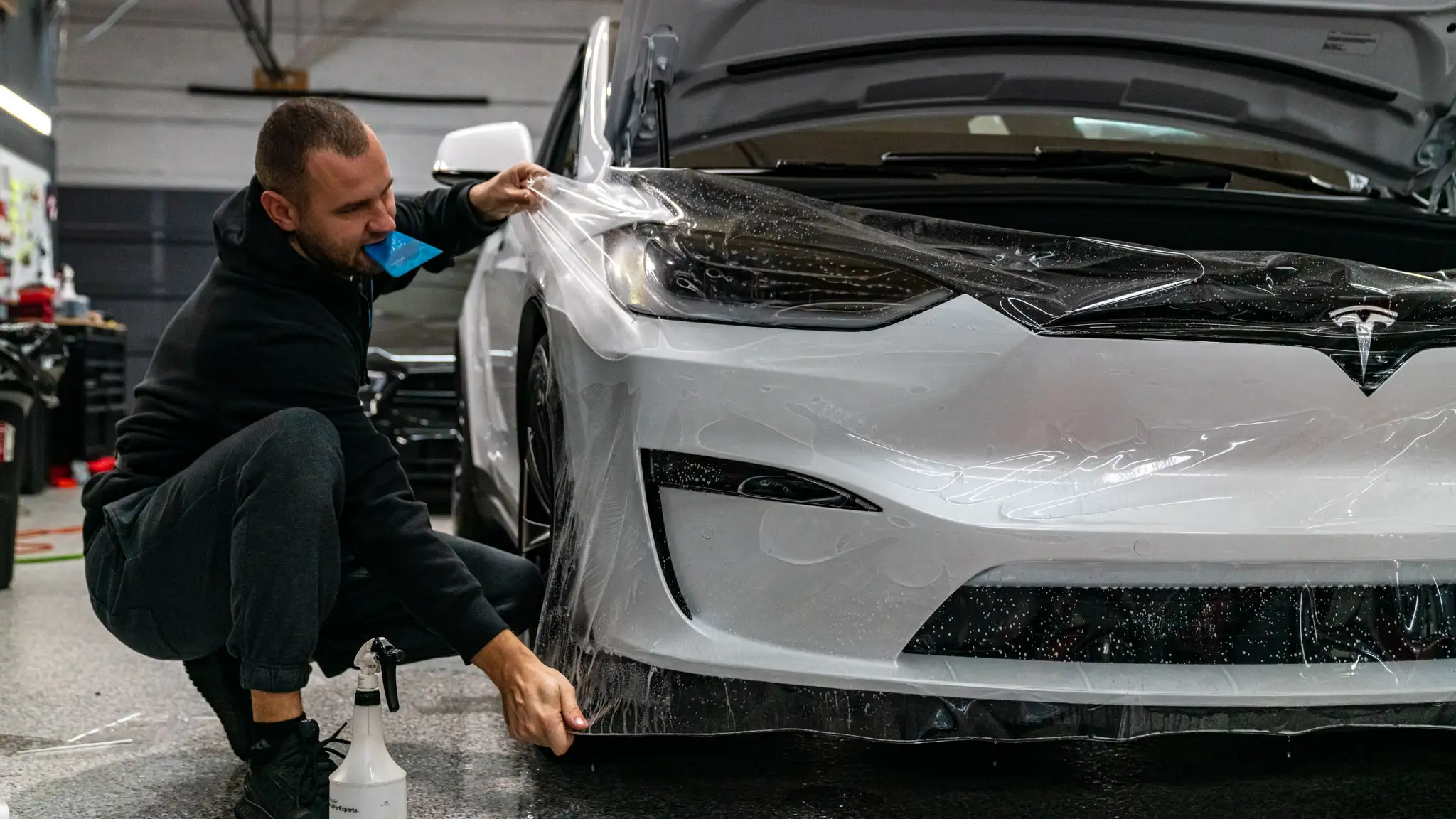
A thick layer on the paint takes the hit. PPF does this. So does PeelClear, which we spray on instead of sticking on, and which we recommend first for most cars.
PPF and PeelClear go on your paint and take the rock chips so the paint doesn't. A ceramic coating goes on top of that. It blocks sun, salt, and bird droppings and makes every wash easier. They protect against different things, so most cars that matter to their owner end up with both. Here's how to tell what yours needs.
| PPF | Ceramic coating | |
|---|---|---|
| Built to stop | Rock chips, gravel, road debris. It absorbs impact. | UV fade, road salt, bird droppings, bug acid. It blocks chemistry. |
| Thickness | Thick. Measured in mils, like a flexible skin over the paint. | Thin. Measured in microns, like glass bonded to the clearcoat. |
| Scratches | Absorbs light scratches. Premium PPF re-flows light marring with heat. | Resists wash marring. Not scratch proof. |
| Washing and gloss | Protects, but edges need care and PPF can dull with age. | The whole point. Slick surface, faster washes, deeper gloss. |
| When it takes damage | A damaged panel means removing and replacing that panel's PPF. | Light damage polishes out and the panel gets recoated. |
| Aging | Adhesive ages. Cheap PPF yellows. Edges are the first thing to fail. | Beading fades gradually over years. Wash habits set the pace. |
| Removal | Professional work. Old adhesive can fight back. | Nothing to peel. It wears down or gets polished off. |
Full detail on the ceramic side lives on the ceramic coating page.
Nothing you can put on a car makes it scratch proof. What you're buying is a layer that takes the damage instead of your paint, and the two products take it differently.
PPF is thick enough to swallow light scratches whole, and premium PPF re-flows light swirls when heat hits it. Sun on the hood or a bucket of warm water, and the marring relaxes back out. That self-healing has rules, though. It needs heat, and it only works on light damage. A deep gouge means replacing that panel's PPF.
A ceramic coating is far thinner, so it can't swallow a scratch. What it does is make the surface slick and hard enough that everyday wear, like dust dragged by a wash mitt or scrubbing off bugs, leaves less of a mark. Light marring on a ceramic coated car polishes out, and the panel gets recoated.
Deep scratches get past both. No product changes that, and we'd rather tell you now than at pickup.
PeelClear is what we recommend first for most cars. We spray it on in our shop the way clearcoat goes on, it cures 8 to 12 mils thick, and it covers the whole car with no edges, seams, or adhesive. A chip in it gets sanded and buffed or spot sprayed instead of replaced. When you ever want it gone, it peels off by hand and your factory paint is underneath. It carries a 20-year manufacturer warranty.
PPF earned its reputation. It absorbs rock chips, premium PPF heals light swirls in the sun, and it has decades of history behind it. It also has the parts the brochures skip: edges that can lift, adhesive that ages, seams on curved panels, and a damaged panel means replacing that panel's PPF.
PPF is still the right call for a track car, a truck that lives on gravel, or an owner who has heard all of this and wants PPF. We install both, and we'll tell you which one fits your car before you spend a dollar.
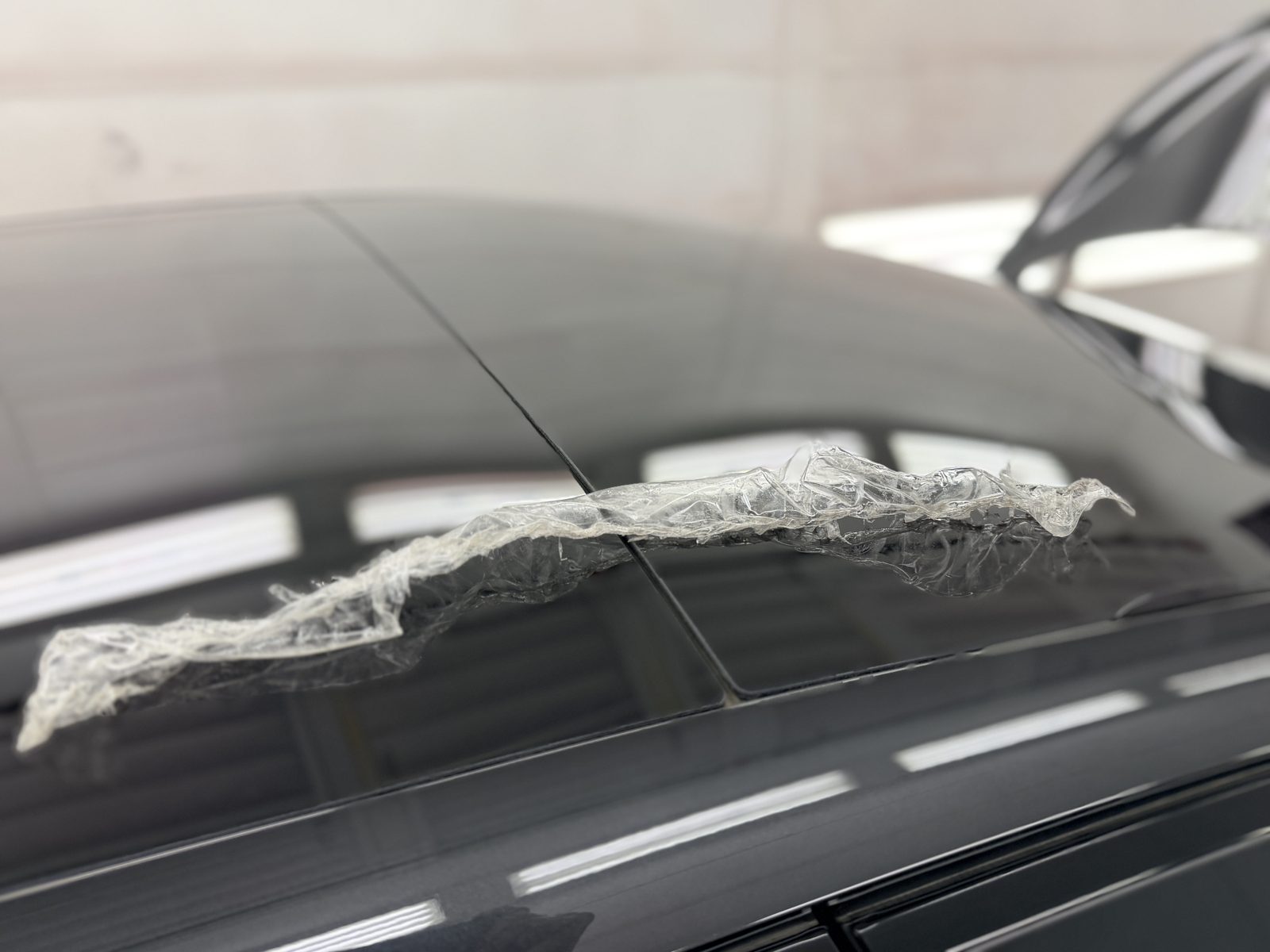
Old PPF coming off a customer's Lucid Air in our shop. Every PPF install comes off eventually, so how it comes off matters as much as how it goes on.
Full-vehicle PPF is the most expensive option here, because wrapping a curved car in flat sheets takes days of teardown and labor. PeelClear covers the whole car for less than full-vehicle PPF, because it's sprayed on rather than cut and fitted. A ceramic coating costs a fraction of either. Not because it's lesser work, but because it guards against slower, quieter damage.
So the useful question isn't which one is cheaper. It's what you're protecting against, and for how many years. Divide any quote by the years the work lasts and the numbers get honest fast. A job that holds up for years costs less than a bargain redone every two. PPF, PeelClear, and ceramic coating pricing is published by vehicle size on our pricing page.
This question comes up most with Tesla owners, because Tesla paint marks up faster than most and the cars rack up highway miles. The short version: the ceramic coating handles the swirls and the sun, and PPF or PeelClear handles Route 422's gravel. The long version, including what we see on Model 3 and Model Y paint, is on the Tesla ceramic coating page.