Paint Correction

    Your paint isn't ruined.
    It's hidden.

    Swirl marks. Haze. Water spots etched into the clearcoat. Paint correction removes a microscopic layer of oxidation and defect, exposing the factory finish underneath.

    • 352 Google Reviews
    • 5-Star Rated
    • Featured in PPF Magazine
    • Region's Only PeelClear (Peelable Paint Protection) Installer
    The Problem

    Under those swirl marks is
    the paint you paid for.

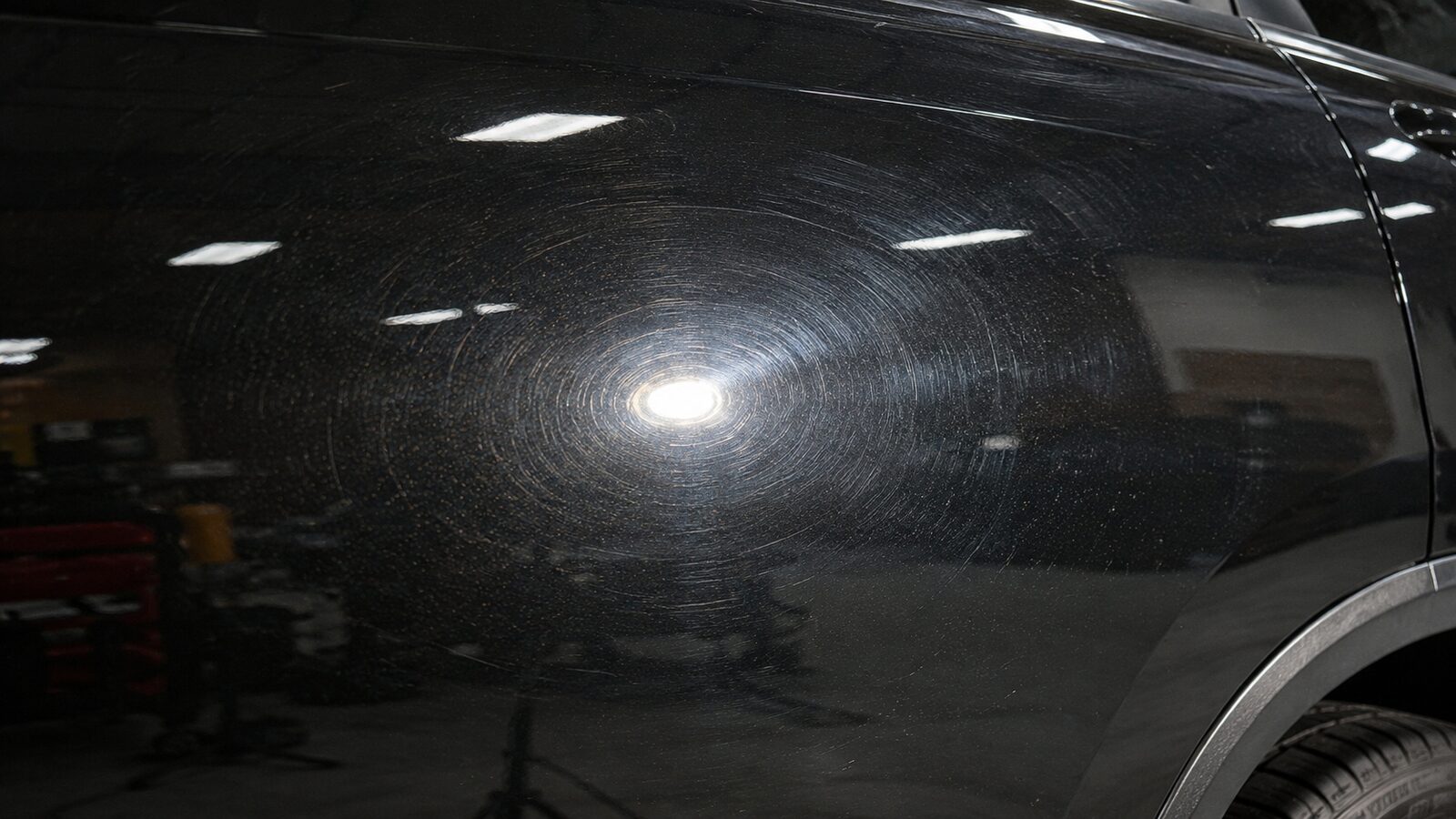
    Every automatic car wash, every dry microfiber, every snow removal with a brush leaves micro-scratches. After 2–3 years, the clearcoat is a web of tiny gouges that catch light and kill depth.

    You're not looking at bad paint. You're looking at a damaged clearcoat over good paint. Correction fixes the layer you can actually fix.
    Stage Options

    Three depths of correction.

    01Stage · Enhancement
    Single pass

    One-Step Enhancement

    Removes light swirls and haze. Big gloss jump. Best for well-maintained daily drivers.
    02Stage · Correction
    Two-step

    Two-Step Correction

    Compounds deeper defects, then refines the finish. Most common on vehicles 6+ years old.
    03Stage · Show
    Concours

    Multi-Stage Show Correction

    For concours, resale prep, or owners who want every defect gone. We check the paint at every step and stop before it costs you clear coat.
    Correction pairs with ceramic coating . Locks in the gloss we just revealed.

    Read the full breakdown

    What correction can fix, and what it can't.

    This is the service most often sold as something it isn't. Open whatever you want straight.

    ● THE TRUTH

    Your paint probably isn't ruined

    Most people book correction because the car looks tired and they've decided the paint is shot. It usually isn't.

    Your color coat sits under a layer of clear coat, and almost all the damage you're looking at lives in that clear layer. Swirl marks from washing. Fine scratches. Water spots that etched in on a hot day. Oxidation that dulled everything down. The color underneath is typically fine.

    What you're seeing is light hitting thousands of tiny defects and scattering instead of reflecting. Correction levels that surface back out so light reflects cleanly again. That's the whole trick, and it's why a corrected car looks wet and deep instead of flat.

    Same car. Different day. Nothing was added, something was taken away.

    ● THE LIMIT

    Why we assess before we touch anything

    Here's the fact that governs this entire service. Clear coat is a finite resource. It's thinner than a human hair, every polishing pass removes a little of it, and it never comes back.

    Done right, that's completely fine. You'll never miss what came off and the car looks transformed. Done aggressively by someone chasing a result, a shop can cut straight through the clear into the color underneath. At that point it isn't a polishing problem anymore, it's a repaint.

    So we look at what we're working with before anything starts, and we work in stages instead of going as hard as possible right away. We take the least we need to get the result.

    It also means we sometimes say no. Paint that's already been corrected hard by a previous shop, clear coat that's failing or peeling, heavy filler under the surface from old body work. When we decline, we tell you exactly what we're seeing and what can safely be done instead. Turning work down isn't us being difficult. It's the whole reason to trust the yes.

    ● THE CRAFT

    Why one approach doesn't fit every car

    Paint is not one material. A hard German clear coat and a soft Japanese clear coat behave completely differently under a machine, and the combination that works beautifully on one can make a mess of the other.

    That's why we test a small area first and dial in the right pad and compound for your car specifically. It takes time up front and it's the difference between polishing and gambling.

    • Too aggressive for the paint and you've marred the finish and spent clear coat you didn't need to spend.
    • Too gentle for the paint and nothing happens. You paid for a process that didn't touch the problem.
    • No finishing stage and you get holograms, those 3D shimmer trails that show up in sunlight. That's the most common damage we're hired to undo.

    A shop that uses one combination on every car that comes through isn't correcting paint. It's running a routine and hoping.

    ● WHAT TO EXPECT

    What correction won't fix

    We'd rather set this straight before the job than explain it at pickup.

    • Deep scratches don't disappear. If it went through the clear coat, polishing can soften it but not remove it. And it can look more obvious afterward, because the haze that was hiding it is gone. We show you these under good light before we start.
    • Chips are not scratches. A rock chip is missing material. Polishing can't put material back. That's touch-up or paint work.
    • Failing clear coat can't be polished healthy. Once clear coat is peeling or cloudy from the inside, it's past what polishing reaches.
    • It doesn't stop the damage coming back. Corrected paint is bare and exposed. Without protection on top, and without changing how the car gets washed, the swirls return on schedule.
    ● THE PRICE

    How to read a correction quote

    Correction is the easiest service in this industry to sell as something it isn't, because the word covers everything from a twenty-minute gloss pass to two days of staged machine work.

    There's no way around the labor. Real correction is many hours of skilled work on every panel of the car. So when a correction is priced where a wash lives, arithmetic says it's one of three things.

    • A single light polish wearing the word correction.
    • A filler product that fills the swirls with oils and looks perfect until about the third wash.
    • A rushed job that leaves holograms behind and hands you a car that looks worse in the sun than it did.

    Ask how many stages are included, ask whether they test a section first, and ask what happens if your paint turns out to be too far gone to work on safely. The answers sort shops quickly.
    Frequently asked questions.

    What is paint correction, in plain terms?

    It's machine polishing that removes damage living in your clear coat. Swirl marks, wash scratches, the shimmer trails a previous shop left behind, oxidation, water spot etching. Here's the part people don't expect: your paint usually isn't bad, it's buried. Correction pulls the gloss back out. Then a protection layer locks it in.

    Is this the same as a buff and polish at a detail shop?

    Not usually. A single quick polish pass boosts gloss and hides some damage. That's enhancement, and it has its place. Correction is multi-stage work that removes the defects instead of filling them. Both get called polishing, so ask which one you're being quoted, and ask how many stages.

    Will every scratch come out?

    No, and we'll show you which ones won't before we start. Deep scratches that went through the clear coat can't be polished away. Here's the thing nobody warns people about: those deep scratches can look more obvious after correction, because the haze that was camouflaging them is gone. We walk the car with you under good light first so there are no surprises at pickup.

    Can correction damage my paint?

    In the wrong hands, yes, and this is the honest risk of the whole service. Your clear coat is thinner than a human hair, and every polishing pass takes a little of it. Done carefully that's fine and you'll never miss it. Done fast and aggressively, a shop can go through the clear coat into the color underneath, and that's a respray, not a polish. It's why we go stage by stage instead of chasing a finish line.

    Do you ever turn correction jobs down?

    Yes, and we'd rather tell you no than take your money and hurt your car. Paint that's already been corrected hard by someone else, clear coat that's failing or peeling, heavy filler from old bodywork. In those cases we explain what we're seeing, tell you why we're declining, and offer what can safely be done instead. Sometimes that's a lighter service. Sometimes it's nothing.

    Why is real correction more expensive than I expected?

    Because it's hours of skilled hand-guided machine work, and there's no shortcut that produces the same result. When a correction is priced like a wash, it's one of three things: a light gloss pass wearing the wrong name, a filler product that hides defects until about the third wash, or a rushed job that leaves the paint worse than it started. The price tells you the scope.

    What are those 3D shimmer trails in my paint?

    Those are holograms, and they're the signature of rushed rotary work. High-volume shops that skip the finishing stage leave them behind. Undoing them is some of the most common work we're hired for, which tells you how often corners get cut on this service.

    Do I need correction before a coating or PeelClear?

    Almost always, and this is the one worth getting right. Protection goes over whatever your paint looks like that day, and it seals it there. Swirls under a coating stay under that coating. Correcting first is the difference between locking in gloss and locking in damage, which is why we quote the two together.

    How long will the results last?

    The correction itself is permanent. The damage is gone. What isn't permanent is the exposure: freshly polished clear coat is bare, so without protection on top it starts collecting new swirls on a predictable schedule, especially if the car sees automatic washes. That's why we quote correction and protection as a pair.

    I'm selling the car soon. Is it worth it?

    Often not the full job, and we'll say so. A lighter enhancement polish and a thorough detail usually gets you most of the visual payoff for a lot less money when the car is about to change hands. Yes, that means talking you out of the bigger ticket. We'd rather you come back for the next car.

    Get the gloss back.