Paint Protection Film

    Invisible armor.

    Self-healing film applied to the panels that take the most damage — hood, fenders, mirrors, bumpers. Road debris bounces off. Your paint stays untouched.

    • 352 Google Reviews
    • 5-Star Rated
    • Featured in PPF Magazine
    • Region's Only PeelClear (Peelable Paint Protection) Installer
    The Problem

    Your clearcoat is under attack
    every time you drive.

    Highway debris, stone chips, salt, bug acid, sap, bird droppings. Your clearcoat takes all of it. By year three, your vehicle value is dropping without you realizing.

    PPF puts a self-healing layer between your paint and the road. Rock hits the film, not the factory finish. Minor scratches vanish with heat. The car still looks like it rolled off the truck.

    Coverage Options

    Three tiers of armor.

    01Coverage · Partial Front
    Most common

    Partial Front

    The most common package. Protects the zone that takes 90% of highway damage. Hood leading edge, fenders, mirrors, bumper.
    02Coverage · Full Front
    Seamless

    Full Front

    Full hood, full fenders, mirrors, bumper, headlights. For owners who want seamless coverage with no visible seam mid-hood.
    03Coverage · Full Vehicle
    Specialty

    Full Vehicle

    Every painted panel. For owners who want front to back paint protection.
    PPF pairs with ceramic coating for a hydrophobic, high-gloss finish on top of the film.

    Recent PPF work

    Film on the cars that need it.

    Sports and luxury.

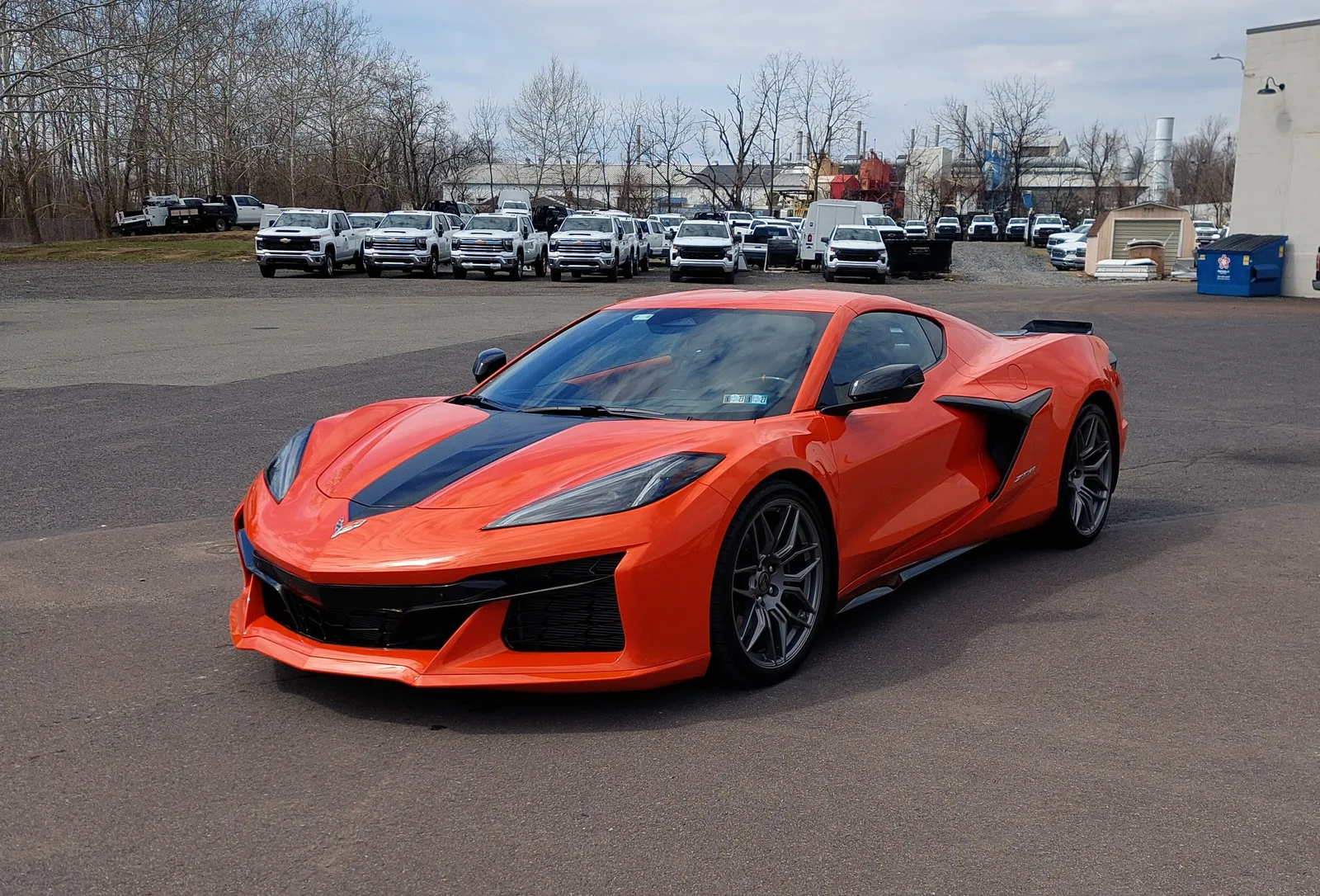
    • Amplify Orange Chevrolet Corvette C8 Z06 front three-quarter outdoors, deep gloss finish
      Corvette C8 Z06
      Full-Front PPF
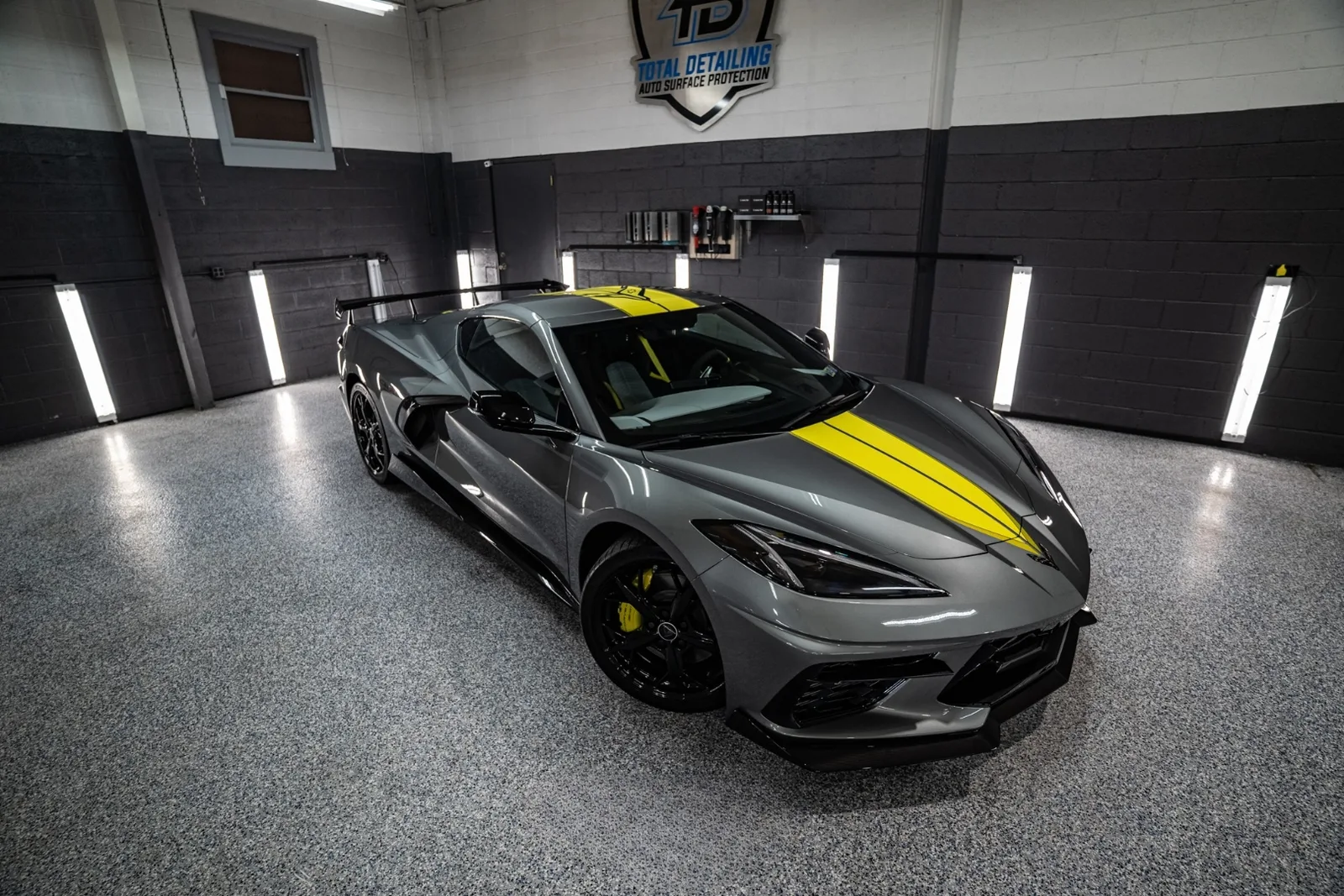
    • Hypersonic Gray Chevrolet Corvette C8 with yellow racing stripe, front three-quarter in shop bay
      Corvette C8
      PPF · Stripe Protection
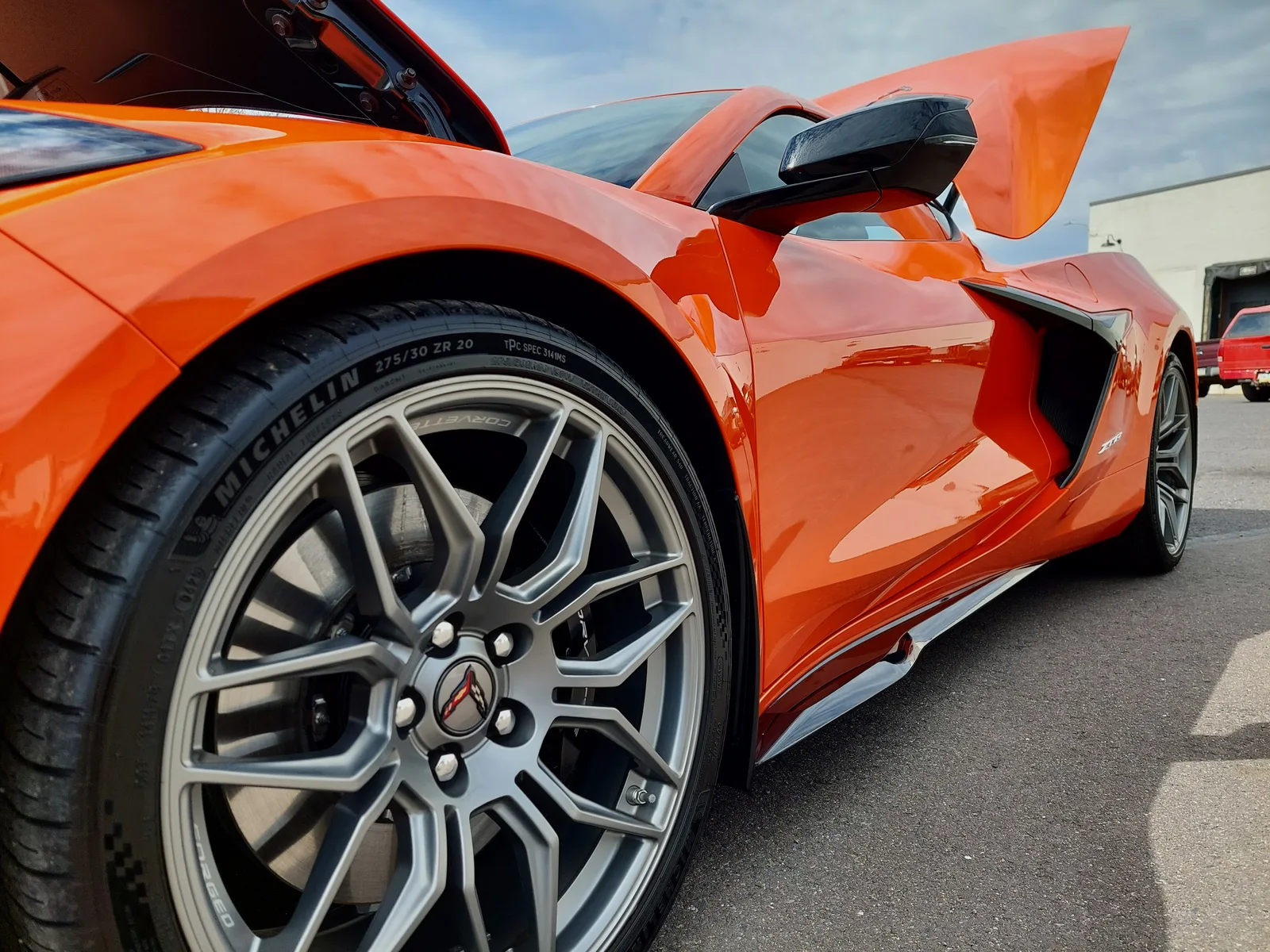
    • Detail shot of orange Corvette C8 Z06 side rocker, Michelin tire and Corvette wheel, deep gloss flake
      Corvette C8 Z06
      PPF · Rocker & Wheel Detail
    Why Total Detail

    Certified installers.
    In-house body shop.

    Manufacturer-approved film brands. Filtered-airflow install room. Every edge wrapped, not trimmed on the panel. And our in-house body shop handles anything that needs paint or bodywork.

    HOW IT WORKS

    The Process.

    1. 01

      Tell us what you're driving

      Short form or a phone call. A few photos speed us up. We reply within 24 hours with a real quote — usually same day.

    2. 02

      Bring it in for inspection

      We walk the vehicle with you. Confirm the service, the scope, the timing. No surprise line items, no upsell you didn't ask about.

    3. 03

      We do the work

      Dedicated bays. Certified technicians. Paint thickness gauges, climate-controlled install rooms, the tools the job actually requires.

    4. 04

      You drive it out looking new

      Walkthrough at pickup. Aftercare instructions. A shop you know where to come back to next time.

    Read the full breakdown

    How to tell a good film install from a bad one.

    Two installs can look the same on day one and be different cars by year two. Open what you want to know.

    ● THE RIGHT JOB

    What film is genuinely great at

    Paint protection film is a thick, flexible urethane sheet that goes over your paint with an adhesive. It was engineered for one job, and it's excellent at that job.

    When a rock hits at speed, the film deforms. That spreads the energy out across a wider area instead of letting it punch into one small spot. The paint underneath survives a hit that would have chipped it.

    That's real engineering with decades of field history behind it, and it's why we install film for the cars that need it. Track cars taking repeated debris at speed. Trucks on gravel roads. Anything living in conditions that throw rocks at your paint over and over.

    For everything else we'll point you at PeelClear, and we'll explain why in plain terms either way. Recommending against our own bigger ticket when it isn't the right fit is the whole job.

    ● THE FILM ITSELF

    Why two films that look the same aren't

    Film is where the gap between good and cheap is widest, and it's almost invisible when the car leaves the shop.

    • The urethane recipe decides if it yellows. Premium film uses a UV-stable chemistry. Bargain film uses one that turns yellow under sun within a couple of years. On a white car it's obvious. On day one you can't tell them apart.
    • Thickness is not the headline number. People shop film by thickness because it's the easiest number to compare. How the edges are handled matters more.
    • Warranty terms vary more than the films do. Some transfer to the next owner. Some are void the day you sell. If resale matters to you, ask before the install.

    When we install film, we install premium aliphatic urethane and we put the warranty terms on the table at quote time. Ask any shop what film they use, then go look it up. A shop that won't name it has told you something.

    ● THE INSTALL

    Where film installs go wrong

    Film is unforgiving of shortcuts, and every shortcut shows up later rather than sooner. That's what makes it easy to sell badly.

    • Flush-cut edges. An edge trimmed flat on the panel face is on a timer. Sun and water work at it until it lifts and collects a dirt line. Wrapped edges have nothing exposed to attack.
    • Skipping correction. Whatever the paint looks like that day is what you're stuck with for the life of the film.
    • Installing in the open. Dust and pollen landing on the adhesive during a driveway or parking-lot install aren't just ugly. Every speck is a weak point where the film doesn't fully bond.
    • Rushing the job. Film has to be stretched and relaxed onto a curved body. A rushed install leaves stress marks, lifted corners, and seams in places they didn't need to be.
    ● HONEST LIMITS

    What we tell people before they buy film

    We'd rather you hear this from us now than find it out in year six.

    • Full-car film has seams. You're wrapping a flat sheet around a 3D object. Seams at panel edges are physics, not sloppiness. For full-car coverage with no seams at all, that's the comparison where PeelClear wins.
    • The adhesive ages. Removal years later is professional work and can be stubborn.
    • Self-healing needs heat. It's real, and it has conditions. Sun, warm water, or a heat source.
    • It's a big install. Full-vehicle film is labor-heavy and priced accordingly, because it's hours of skilled hand work.

    None of that makes film a bad product. It makes it a specific product for a specific job, which is exactly how we sell it.
    Frequently asked questions.

    Should I get film or PeelClear?

    It comes down to how you drive. Film was built for one job: taking repeated hits from rocks at speed. If you track the car or live on gravel roads, film is the right tool and we'll say so. For a daily driver, a show car, a lease, or a color change, we point people to PeelClear. It's as thick or thicker, it has no edges or adhesive to fail, it repairs instead of gets replaced, and it comes off clean. We install both, so we have no reason to steer you wrong.

    Is the film visible?

    A good install is close to invisible from a few feet away. If you can see seams from six feet, it was installed wrong. Up close you can still spot seams in some spots on the car, because film is a flat sheet going onto a curved body. That's the nature of it.

    Why does cheap film turn yellow?

    It's chemistry, not bad luck. There are two kinds of urethane on the market. Good film uses a UV-stable recipe that resists yellowing. Bargain film, the kind that fills online marketplaces, uses a recipe that goes yellow in sunlight within a couple of years. It shows up worst on white cars. Two films can look the same on day one and be completely different by year two, so ask what film a shop installs and look it up.

    What should I ask about the edges?

    Ask if they wrap them. An edge cut flat on the face of a panel is a failure waiting to happen. Sun and water pick at it until it lifts and collects a dark dirt line. A proper install wraps the edge around the panel, into the jamb, under the lip, so there's no exposed edge to attack. Edge work predicts how an install ages better than the brand does, and better than the thickness does.

    Do you correct the paint before the film goes on?

    Yes, and it matters more than it sounds. Film goes over whatever your paint looks like that day. Any swirl under the film stays there for the life of the film, and you can't reach it without pulling the film off. Correcting first is the difference between sealing in gloss and sealing in damage.

    How long does it last?

    Usually 7 to 10 years, depending on the film and how you drive. We'll go through the warranty specifics with you at the quote, including whether it transfers if you sell the car. Some warranties do and some end the day you sell, and that's a question worth asking before install, not at trade-in.

    Does self-healing really work?

    It does, with one rule nobody mentions: it needs heat. Light swirls reflow in sun, under warm water, or with a heat source. They won't disappear on their own in a cool garage. People who were told "it heals itself" and nothing else end up thinking their film is defective when it's working exactly as designed.

    Will it hurt my paint when it comes off?

    Often it comes off clean, but there's real risk and we won't pretend otherwise. The film type, the condition of the paint when it went on, and the kind of paint your car has all change the odds. Adhesive also gets tougher with age, so an old removal is professional work. If that risk is your main worry, PeelClear has no adhesive at all and peels off cleanly.

    Can I put a ceramic coating on top?

    Yes, and most people do. The film handles the rocks. The coating gives you the gloss and the surface that washes in half the time. Each layer has one job.

    Get a PPF quote.

    Hours
    Mon–Fri 8:00–6:00
    Sat–Sun Closed