

Sap and droppings
eat into clearcoat.
If the car parks outside, the damage is not only stone. We spray a clear film over the paint so what lands on it stops reaching the finish underneath.
- 352 Google Reviews
- 5-Star Rated
- Featured in PPF Magazine
- Region's Only PeelClear (Peelable Paint Protection) Installer

Two summers outside.
Tree sap bakes on and pulls into the clearcoat. Bird droppings are acidic and start etching within hours in the sun. Neither one washes off after the first day, and both leave a dull ring you can feel with a fingertip.
Then there is the sun itself. Two summers of it on an unprotected hood takes the crispness out of the reflection, and it happens slowly enough that you do not notice until you park next to the same car in a different color.
The fix at that point is machine polishing, and polishing removes clearcoat. There is only so much of it on the car.

Same tree.
Different outcome.
A clear film, 8 to 12 mil thick, sits over the paint. Sap and droppings land on that. When something does etch, it etches a layer that is not your clearcoat, and that layer sands and polishes back without spending any of your paint.
It goes on as a liquid and cures into one continuous film, so there is no cut edge for grime to collect in and no adhesive baking onto the finish underneath.
Years later it peels off in sheets and the factory paint is still there, in the condition you bought it.
HOW IT GOES
Four steps, and the first one matters most here.
- 01
Decontaminate
Sap, fallout and bonded contamination come off chemically and with a clay bar. Anything still stuck to the paint would otherwise get sealed under the film, so this is not optional.
- 02
Correct
Etch marks and water spots get machine polished out where they will come out. Where they will not, we tell you before we start rather than after.
- 03
Mask and spray
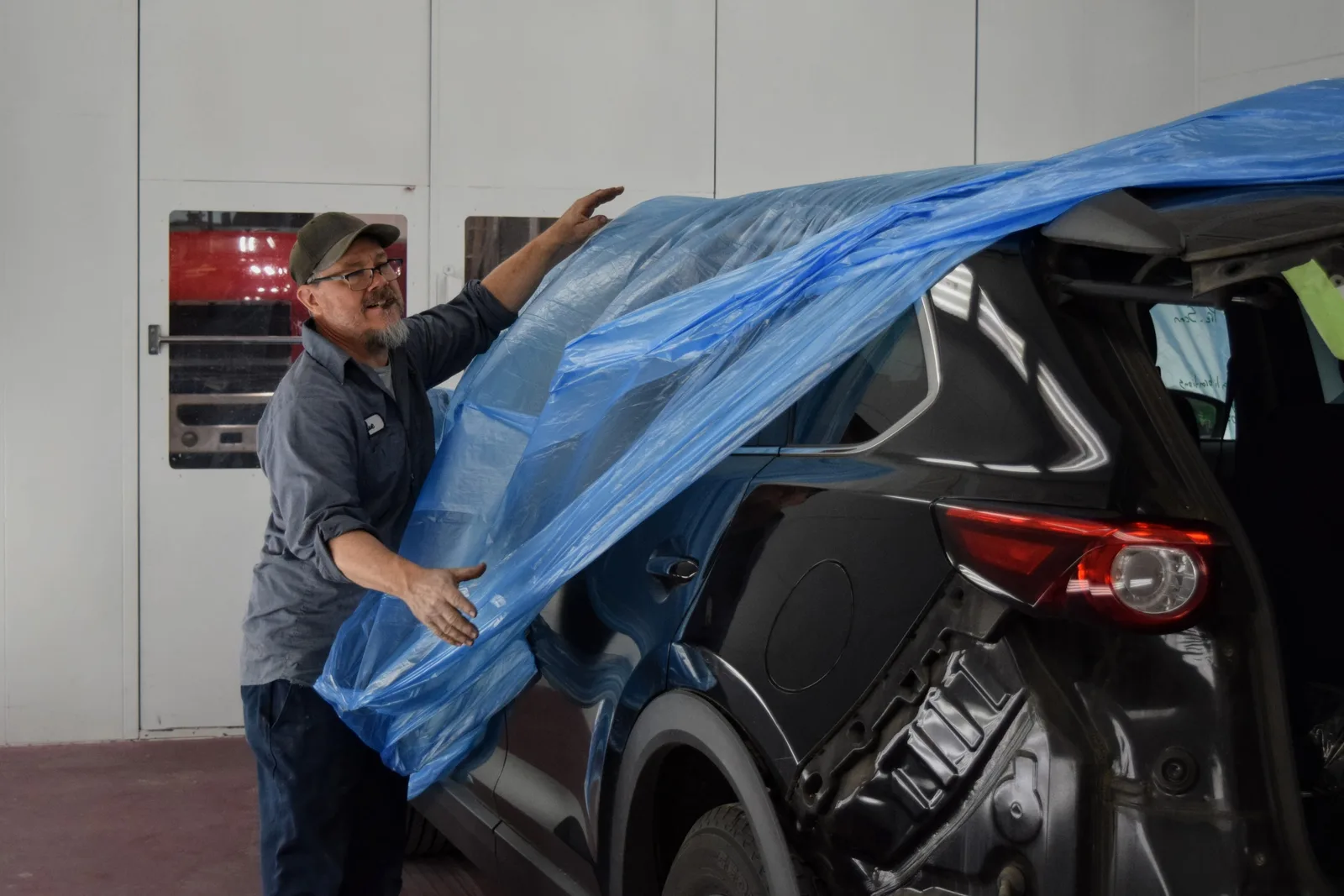
The car is masked the way a body shop masks a repaint, then a clear film is sprayed in even coats inside a downdraft paint booth.
- 04
Cure, sand, polish
It cures, then gets wet sanded and polished like fresh clear coat. That is the step that makes it read as depth in the paint instead of a layer on top.